Ever thought about owning a slice of Surf City and letting it help pay for itself? Huntington Beach offers rare coastal assets, steady lifestyle demand, and a set of rules you need to understand before you buy. If you want both enjoyment and income, the difference between a good deal and a great investment often comes down to location, regulations, and the right underwriting.
In this guide, you’ll learn which property types work best on the coast, how to frame returns, the city rules that affect your plan, and a practical checklist you can use before writing an offer. Let’s dive in.
Huntington Beach market snapshot
Huntington Beach is a large coastal city with about 190–200k residents and a strong income base. The U.S. Census shows a median household income near $120,919 and owner occupancy around 55%, which helps support long‑term rental demand in a supply‑constrained market. You can review the full demographic baseline on Census QuickFacts for Huntington Beach for context on incomes and housing tenure. Census QuickFacts shows the latest city data.
Public housing indexes place typical home values in the low $1.3M range, with median sale prices around $1.2M as of early 2026. Rents track high for Orange County, with observed rent indexes in the low $3k range. Waterfront and Harbour addresses often command sizable premiums and may trade at lower initial yields compared to inland assets.
On the investment side, county‑level reports show Orange County multifamily cap rates generally in the mid‑4% range through 2024–2025. Coastal trophy assets can price even tighter, while smaller or value‑add deals may show slightly higher initial yields. For context, see the countywide benchmark in the Orange County multifamily market report.
What to buy on the coast
Single‑family rentals (SFR)
Detached homes close to the beach can deliver strong rent and lifestyle flexibility. You might use the home part‑time and lease it seasonally or long term. Budget for higher insurance and maintenance near the water, and keep seasonality in mind if you plan to lease during peak summer.
2–4 unit and small multifamily
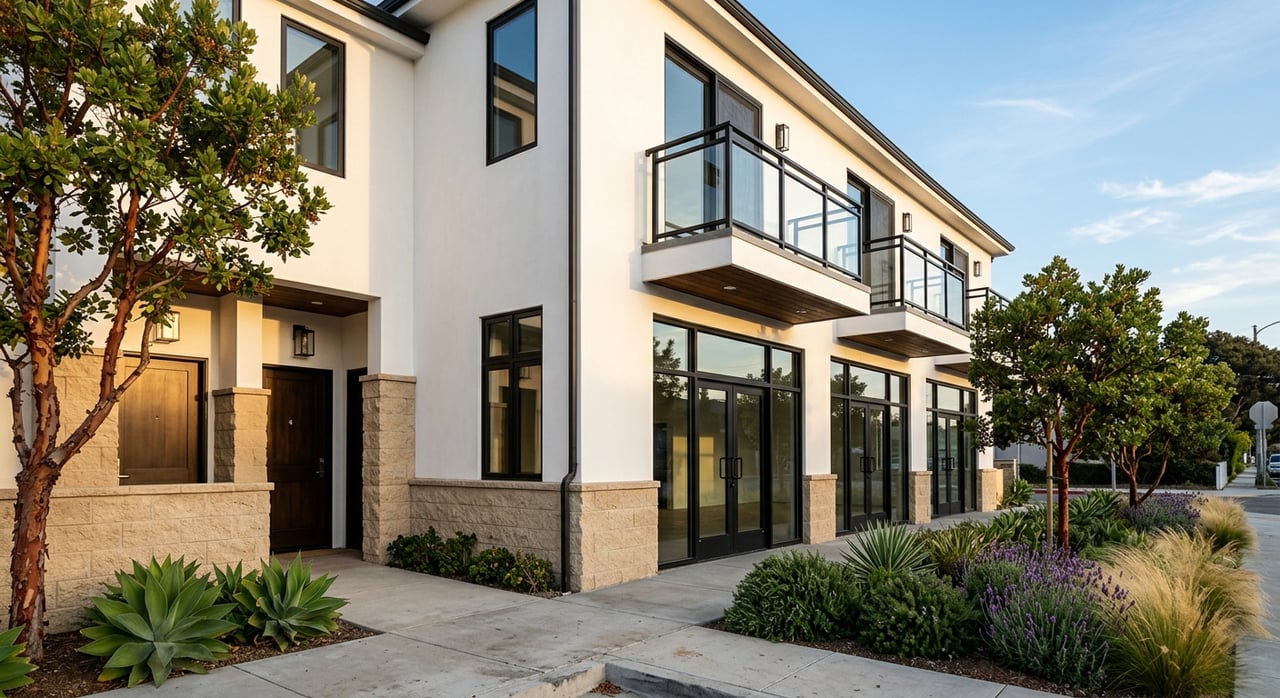
Duplexes, triplexes, and fourplexes can be efficient for local investors who want professional management and more predictable cash flow. Near the coast, competition and pricing are strong, so expect lower cap rates than inland Orange County. County reports point to mid‑4% averages, with premium locations often tighter. Use MLS and local broker comps for the most accurate small‑asset pricing.
Condominiums near Main Street and Pacific City
Condos give you walkability, proximity to the Pier, and generally lower entry price than a single‑family home in the same location. Watch HOA dues and special assessments, which can reduce net cash flow. Many condo buyers are owner‑occupants, which helps stabilize this segment for long holds.
Mixed‑use and retail in activity hubs
Main Street, the Pier, and Pacific City enjoy daily foot traffic and visitor draw. Street‑level retail or mixed‑use buildings can benefit from tourism and local spend, but they require hands‑on tenant evaluation and active management. For context on the city’s visitor hubs and events calendar, review the Visit Huntington Beach destination guide.
Waterfront and Huntington Harbour
Waterfront homes are ultra‑scarce and often owner‑occupied. When they trade, price per unit is high and acceptable cap rates are low. If you invest here, budget for specialized maintenance and insurance, including attention to docks, bulkheads, and marine exposure.
Demand drivers that matter
Tourism and events
Huntington Beach draws consistent visitor traffic anchored by the Pier district, Main Street, Pacific City, and major events like surf competitions and festivals. This activity supports seasonal demand and helps nearby rentals stay competitive. Explore the city’s event and visitor profile in the official destination guide.
Jobs and access
Many residents work across Orange County, so proximity to I‑405 and regional job centers like Irvine and Costa Mesa adds to the year‑round renter base. The city’s coastal planning and growth context are outlined in the General Plan and Local Coastal Program. You can review the city’s coastal planning framework in the General Plan materials.
Returns and cap rates explained
- County benchmarks: Orange County multifamily reports put average cap rates in the mid‑4% range through 2024–2025. See the IPA county report for context.
- Coastal premium: Expect lower initial yields for Pier‑adjacent, oceanfront, and Harbour assets due to scarcity and buyer competition.
- Small‑asset reality: Duplex to fourplex trades rely on MLS and local broker evidence, which often shows tighter pricing than inland areas. Underwrite carefully with current comps, not just county averages.
Rules that can make or break your plan
Short‑term rentals (STRs)
Huntington Beach requires STR permits and restricts unhosted STRs citywide, with a limited vesting allowance that previously applied in Sunset Beach. Hosted stays are emphasized, and platforms must collect and remit transient occupancy tax. If nightly rentals are part of your plan, confirm the current rules and permit status by address before you buy. See the city’s STR code in Chapter 5.120 of the municipal code and the council record adopting the ordinance in Ordinance No. 4238.
Coastal zone and entitlements
The city operates under a certified Local Coastal Program. Projects in the coastal zone may require a Coastal Development Permit and, in some cases, are appealable to the California Coastal Commission. This can extend timelines and add conditions. Review the city’s coastal framework in the General Plan overview.
Sea‑level rise and flood risk
Huntington Beach completed a Sea Level Rise Vulnerability Assessment with scenarios that identify areas of potential storm‑tide inundation, groundwater emergence, and channel overtopping. If you are buying near low‑lying areas, the Harbour, or Bolsa Chica, review these maps as part of due diligence. Read the Sea Level Rise Vulnerability Assessment and check a property’s FEMA flood status at the FEMA Flood Map Service Center.
Insurance and operating costs
Coastal properties see higher insurance and maintenance. Salt air and corrosion increase ongoing costs, and flood exposure can raise premiums or deductibles. Before you offer, get an insurance quote for the specific address and confirm lender requirements if the parcel is in a mapped flood zone.
How to evaluate location and appeal
Proximity and lifestyle value
Being near the Pier, Main Street, Pacific City, or Huntington Harbour often lifts rent and resale value. Tenants and buyers also look for easy beach access, secure parking, outdoor space, and storage for boards and bikes. For an overview of where visitors and locals spend time, review the destination guide’s neighborhood highlights.
Coastal underwriting adjustments
Adjust your pro forma for the coast:
- Insurance: price wind and flood exposure accurately and note potential higher deductibles.
- Maintenance: budget for exterior wear, decks, roofing, and metal corrosion.
- Vacancy: near tourist zones, expect more seasonality; inland blocks may be steadier.
- Condos: include HOA dues and special assessments in NOI.
Valuation expectations
Use county cap rates only as a backdrop. For a true picture, triangulate MLS comps, local broker sales, and county reports. Expect coastal micro‑markets to command pricing premiums and, at times, lower initial yields than the Orange County average reported in the IPA market study.
Quick underwriting checklist
Use this step‑by‑step list before you write an offer:
- Define use case: owner‑occupied with accessory rental, long‑term rental, or STR. If STR is part of the plan, confirm permit viability early under the city’s STR code.
- Amenity audit: measure distance to the Pier/Main Street/Pacific City/Harbour, review walkability and parking, and confirm storage for surf gear and bikes using neighborhood and visitor resources in the destination guide.
- Hazard checks: run a FEMA flood lookup by address at the FEMA Flood Map Service Center and review the city’s Sea Level Rise Vulnerability Assessment. Note any Local Coastal Program triggers in the General Plan.
- Income and expenses: underwrite with realistic rent comps and vacancy, and adjust for higher coastal insurance and maintenance. For condos, include HOA dues and assessments.
- Utilities and parking: verify who pays each utility and confirm parking ratios for small multifamily.
- Taxes and financing: review Prop 13 basics and look up the parcel’s tax bill and rate components with the Orange County Auditor‑Controller.
- Calls to make: MLS agent/broker for comps, City Planning/Permit Center for STR and coastal permits, OC Auditor for tax details, and your insurance broker for quotes.
Your next step
If you want your Huntington Beach investment to balance lifestyle and strong fundamentals, combine location discipline with coastal‑specific underwriting and a clear plan for permits and insurance. With the right due diligence, you can own a coastal asset that performs today and positions you well for the long term.
Ready to evaluate opportunities or benchmark a property you have in mind? Schedule a consultation with Ashley Sells OC to talk strategy, comps, and next steps tailored to your goals.
FAQs
Can I operate a short‑term rental in Huntington Beach?
- The city requires STR permits and generally restricts unhosted STRs, with a limited vesting allowance that previously applied in Sunset Beach. Confirm the current rules and permit status for your address under the city’s STR code and review the adoption record in Ordinance No. 4238.
How do cap rates in Huntington Beach compare to the county?
- County reports show average multifamily cap rates in the mid‑4% range, with prime coastal assets often trading at lower initial yields. See the Orange County multifamily report for benchmarks and use local MLS comps for small‑asset reality.
What premium do waterfront or Pier‑adjacent homes command?
- Waterfront and Pier‑proximate properties are ultra‑limited and typically command sizable premiums with lower initial yields. Exact premiums vary by address and features, so rely on up‑to‑date MLS comps for pricing and rent expectations.
How does sea‑level rise affect my underwriting?
- Review the city’s Sea Level Rise Vulnerability Assessment and your parcel’s FEMA flood status. Budget for potential insurance changes, adaptation measures, and coastal permit conditions.
What are typical rents and who rents here?
- Public rent indexes place Huntington Beach’s median rents in the low $3,000s. Year‑round demand is supported by local employment access and the coastal lifestyle, with seasonal lift near visitor hubs like the Pier and Pacific City.